
Baroque
The art style Baroque spanned from the beginning of 17th century to the middle of 18th century. It was known for its sculpting, painting, poetry and music. Baroque flourished in Europe chiefly in Italy, Germany and France but it also spread to Spain, Portugal, Netherlands, England and Northern European countries. The art style Baroque made its appearance during the Renaissance period but it broke away from the traditional beliefs of Renaissance while emphasizing more on irregularity and drama. It became much more emotional, free flowing and expressive as compared to rigidity and formality of the Renaissance. Baroque works were usually in adoration of the greatness of God and it was used to convey religious messages. It also facilitated social hierarchy through artworks that showed power, wealth and authority. Baroque started with artworks that were much more emotional, dramatic and irregular as compared to Renaissance artworks. It also showed the freedom of expression which was not possible during the Renaissance period. The artists used dynamic movements in their paintings to show their emotions and feelings towards religion. They depicted various emotions like joy, pain fear and death while depicting religious saints and biblical events. Most of the artworks tried to communicate with people about Jesus Christ and God through emotional paintings that emphasized on drama rather than formality and rule like Renaissance works. Baroque artists usually showed religious scenes in an intricate way to draw attention of public towards them. Baroque developed in Italy where it was born while simultaneously developing in Germany, France and Spain. Baroque artists carried their techniques to other countries mainly through artworks that traveled through churches. The art style migrated to Netherlands where Dutch painters adopted the technique of layering colors and used them as shading to make the work more dramatic and attractive. Baroque became very popular in Germany when the ruler of Bavaria, Duke Wilhelm V commissioned painters like Peter Paul Rubens and Johann Baptist Spranger to paint his residence and castle. Baroque artworks were made even more dramatic after a German artist named Pieter Brueghel created shadows on surfaces with help of dark colors in his artworks. The technique was named chiaroscuro and it made Baroque more dramatic even if the painting itself didn't carry a religious theme. Baroque paintings tried to communicate with people as much as possible through their visual ability that usually caused distortions or extreme movement of figures. Artists used special light effects like light from behind, bright spots and strong contrasts of light and darkness to make their artworks stand out. Baroque artworks were very detailed and usually depicted stories from the Bible. The artists paid much attention to the facial expressions of either Jesus, Virgin Mary or one of the saints while painting these scenes. They used rich colors like crimson, gold and red to bring more drama and emotion in the religious theme paintings. They also painted crucifixions, crucifixes, Holy Families and other Christian symbols in a very detailed way to show their devotion towards the religion. Baroque artworks were usually made more attractive with help of using gold ornaments on frames and backgrounds. The paintings were also given rich frames that sharply contrasted with the background so that it can be easily noticed by people.


Pieter van der Werff, 1710 - Saint Jerome - fine art print
À partir de 19,99 €


Isaac de Moucheron, 1725 - View of Tivoli - fine art print
À partir de 19,99 €


Franz Xaver Wagenschön, 1790 - Stoning of St. Stephen - fine art print
À partir de 26,99 €


Louis de Moni, 1742 - A Lacemaker, with a Boy Blowing Bubbles - fine art print
À partir de 27,99 €


Jean-Marc Nattier, 1734 - Mr. Sarasin - fine art print
À partir de 27,99 €

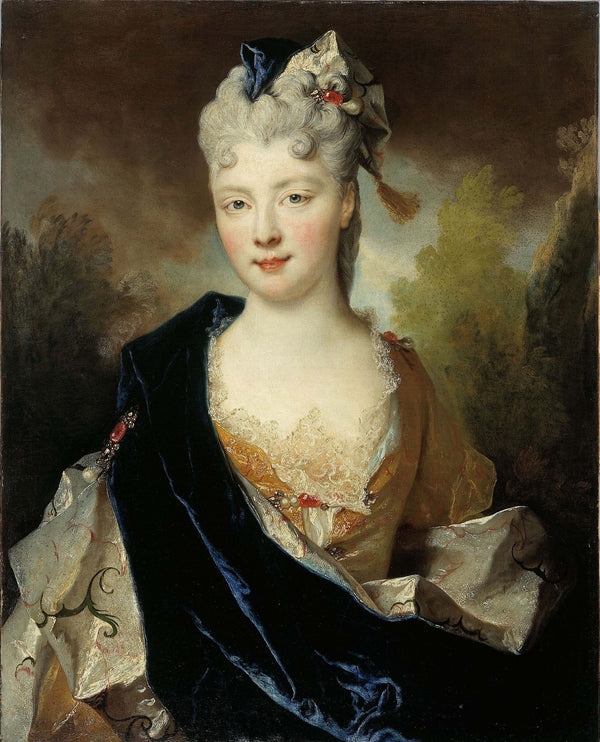


Alessandro Magnasco, 1735 - The Synagogue - fine art print
À partir de 19,99 €


Philip van Dijk, 1730 - The Bookkeeper - fine art print
À partir de 27,99 €


Alessandro Magnasco, 1700 - Carthusian Monks in a Landscape - fine art print
À partir de 19,99 €


Jan Weenix, 1719 - Dead Swan - fine art print
À partir de 27,99 €


Caspar Franz Sambach, 1754 - The death of St. Joseph - fine art print
À partir de 25,99 €


Johann Kupetzky, 1709 - Self-portrait at the easel - fine art print
À partir de 19,99 €


Nicolas de Largillière, 1729 - Elizabeth Throckmorton - fine art print
À partir de 27,99 €


Joseph Wright of Derby, 1771 - The Blacksmith's Shop. - fine art print
À partir de 27,99 €


Pierre Subleyras, 1740 - Seven Angels Adoring the Christ Child - fine art print
À partir de 19,99 €


Gustaf Lundberg, 18th century - Portrait of a Lady - fine art print
À partir de 27,99 €


Charles Brooking, 1759 - English Ships Running before a Gale - fine art print
À partir de 26,99 €


Johann Wolfgang Baumgartner, 1760 - Assumption of Mary - fine art print
À partir de 18,99 €


Cornelis Troost, 1747 - Guardroom Scene - fine art print
À partir de 26,99 €


Jan van Huysum, 1725 - Arcadian Landscape with a Bust of Flora - fine art print
À partir de 29,99 €


Giovanni Battista Piazzetta, 1720 - The Supper at Emmaus - fine art print
À partir de 19,99 €


Alessandro Magnasco, 1710 - The Raising of Lazarus - fine art print
À partir de 19,99 €

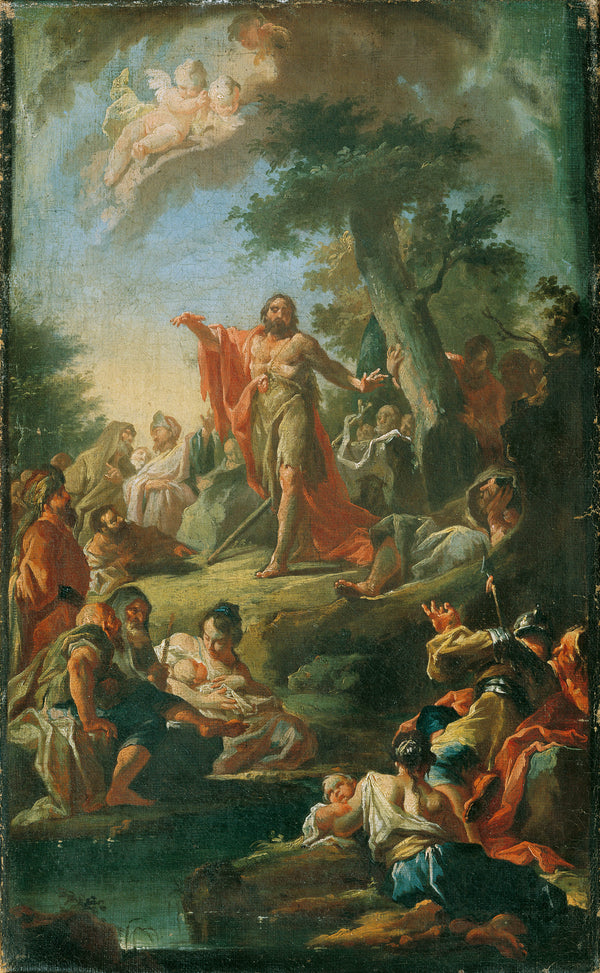
Johann Lucas Kracker, 1750 - The preaching of John the Baptist - fine art print
À partir de 26,99 €


Aert Schouman, 1720 - Merry company at an inn - fine art print
À partir de 27,99 €


Christian Hilfgott Brand, 1750 - Tree Landscape with fountain - fine art print
À partir de 19,99 €


Mattheus Terwesten, 1700 - Aeneas and Dido shelter in a cave - fine art print
À partir de 26,99 €


Giovanni Domenico Ferretti, 1745 - Sketch for a Ceiling Fresco - fine art print
À partir de 19,99 €


Canaletto, 1735 - View of the Piazzetta San Marco Looking South - fine art print
À partir de 19,99 €


Martin van Meytens d. J. (Umkreis), 1769 - Johann Baptist Ruard - fine art print
À partir de 19,99 €


Gaspare Diziani, 1740 - The Assumption of the Virgin - fine art print
À partir de 35,99 €