
Realism
Realism is the section of painting that focuses on depicting a visually accurate image. Realist painters attempted to capture exactly what they saw in real life, rather than creating an idealized version like the classical artists of the Renaissance did.
Most early realistic paintings were portraits and landscapes (used for recording the appearance of nature) but later was expanded into the other areas of painting such as representation of homes, work and natural settings. To convey a sense of realism in their paintings, Realist painters often used color blending, perspective harmony and tone gradation to create the illusion that a viewer is actually looking at real life objects that are three-dimensional (3D). The correct depiction of volume was of high important and used techniques like shading to create the illusion of volume. Realist painters also often used chiaroscuro (contrast between light and dark) in their paintings to create focus on certain objects and isolate them from others.
Realism first appeared during the mid-19th Century as artists attempted to depict what they saw in the world around them. This was in contrast to the highly idealized images of the Renaissance and Baroque period and can be considered a part of Romanticism. During Realism, there was also an emphasis on individual experience rather than concepts like those based on religion or mythology, which Medieval and Early Renaissance artworks had used (this is referred to as a secularization of art). Realist painters are also called Naturalists, but Realism is more specific than that term. Realism became the dominant form of Western painting during the mid-to-late 19th century and was characterized by themes of everyday life. This contrasted with other movements at that time which were either formalist or romanticist. The realistic painters of the 19th century wanted to capture scenes as faithfully as possible, so that they could be used by other people to make a mental picture of common life in Europe and America. They especially focused on rural (countryside) and working class life which was generally ignored by Romantic artist. Many realist painter slike Gustave Courbet and Jean-François Millet painted scenes of farmers in the countryside, while Thomas Eakins and Édouard Manet depicted scenes of life in big cities. Realism can be seen as part of a desire towards naturalism that occurred during the Industrial Revolution. The industrial revolution turned rural living into an urban environment. This forced many peasants and small-town people into the cities, while also giving city workers more time to leisurely contemplate life.
Realist painters wished to be as accurate as possible in their portrayal of different scenes in life and used detailed observation of nature to achieve this. Realist artists of the mid-19th Century commented on what they saw and experienced in everyday life. They were known as "The Eye" painters because they wanted to show people things that they had never noticed before. Their efforts resulted in new ideas regarding composition, form and technique that have become the foundation of modern art.


Josef Neugebauer, 1859 - Still life - fine art print


Franz von Lenbach, 1898 - Mary stuck (geb. lindpaintner) - fine art print


Winslow Homer, 1878 - Peach Blossoms - fine art print


Josef Danhauser, 1830 - The fallen asleep Painter in the studio - fine art print

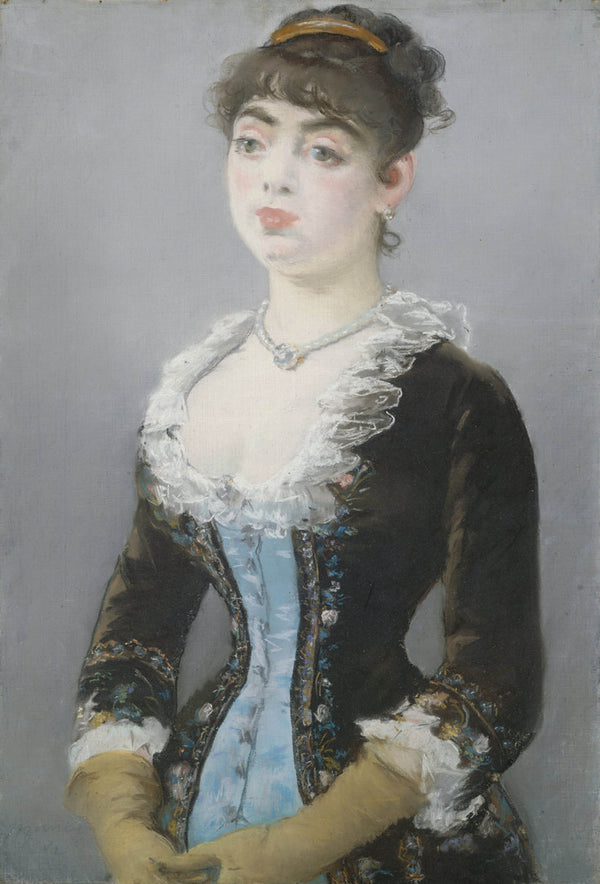
Édouard Manet, 1882 - Mrs. Michael Levy - fine art print


Ludwig Hermann, 1852 - Scheldeufer - fine art print


Eduard Swoboda, 1848 - The contract - fine art print


Gustave Courbet, 1859 - Gregory mother - fine art print


Josef Holzer, 1852 - Mountains - fine art print


Rudolf Hausleithner, 1883 - Carnival morning - fine art print


Gustave Courbet, 1866 - Woman with a Parrot - fine art print


Josef Feid, 1841 - Waldlandschaft - fine art print

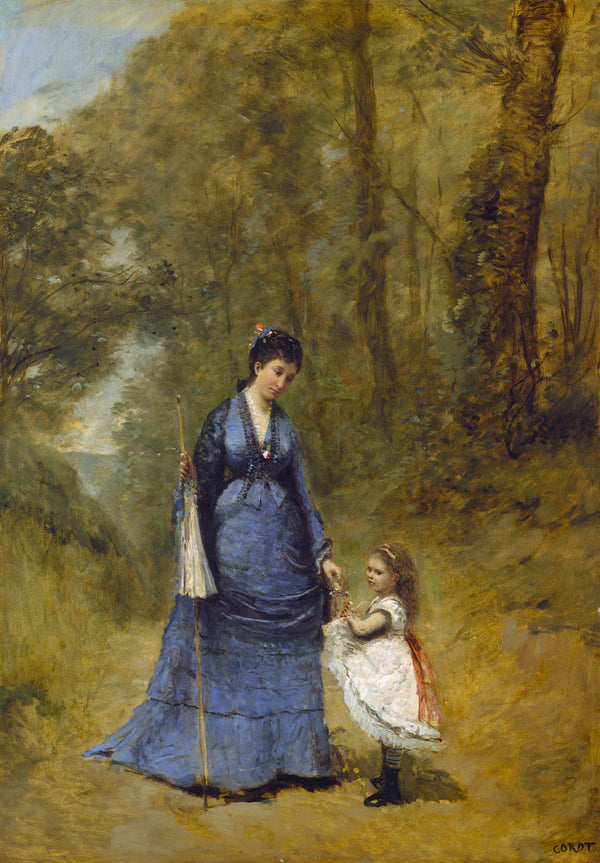
Camille Corot, 1872 - Madame Stumpf and Her Daughter - fine art print


Karl von Jagemann, 1849 - Damenbildnis - fine art print


Franz Schrotzberg, 1836 - Diana and Endymion - fine art print


August von Rentzell, 1833 - Reiterkavalkade with dogs - fine art print


Carolus-Duran, 1861 - Henri Fantin-Latour (1836–1904) - fine art print


Jules Breton, 1855 - The rainbow sky Courrieres - fine art print


Jasper Francis Cropsey, 1852 - The Hudson at Piermont - fine art print


Gustav Ranzoni, 1872 - Flock of sheep on the plain - fine art print


Henriëtte Ronner, 1860 - The cat at play - fine art print


Jean-Louis Forain, 1880 - The lodge - fine art print


Jean-François Millet, 1856 - Woman with a Rake - fine art print


Wilhelm Leibl, 1885 - Peasant Girl with a White Headcloth - fine art print


Jules Breton, 1855 - The communicants in Courrières - fine art print


Franz von Lenbach, 1876 - Street in cairo - fine art print


Theodor von Hörmann, 1879 - Forest shock when Godollo - fine art print


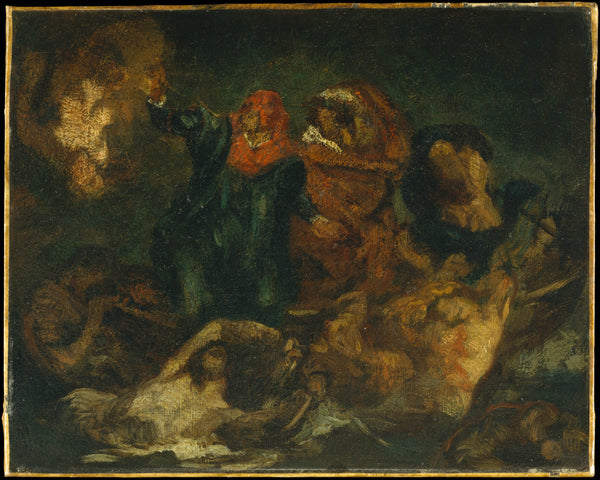
Édouard Manet, 1859 - Copy after Delacroix'sBark of Dante - fine art print


Jean-Charles Cazin, 1891 - Midnight - fine art print


Hermine Lang-Laris, 1891 - The Botanical Garden in Vienna - fine art print


Eugène Fromentin, 1868 - Centaures - fine art print


Gustave Courbet, 1866 - The wounded - fine art print

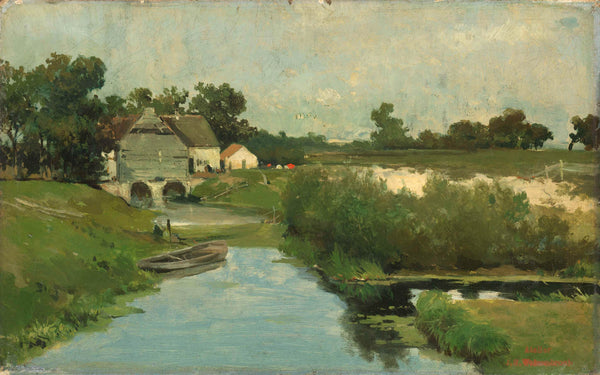
Johan Hendrik Weissenbruch, 1870 - Summer Day - fine art print


Théodore Rousseau, 1855 - Landscape - fine art print


Gustave Courbet, 1862 - The Source - fine art print


Théodore Rousseau, 1830 - Mountain Stream in the Auvergne - fine art print


Gustave Courbet, 1864 - Hunter on Horseback - fine art print


Martin Johnson Heade, 1859 - Approaching Thunder Storm - fine art print

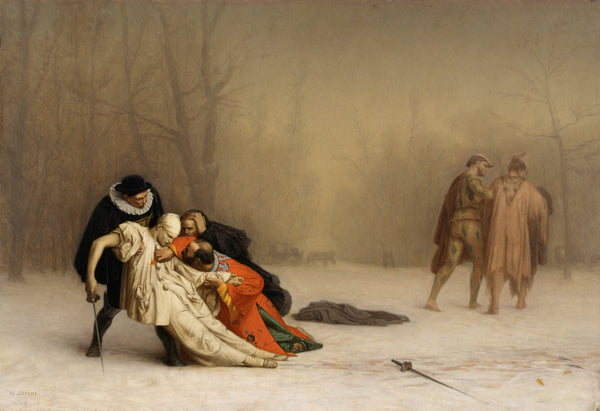
Jean-Léon Gérôme, 1859 - The Duel After the Masquerade - fine art print


Carl Schindler, 1840 - The Sentinel - fine art print


Hans Thoma, 1868 - Agathe Thoma, the Artist's Sister - fine art print


Théodore Rousseau, 1855 - The Pond (Sea) - fine art print


